
Unlock bold smoke flavor on your pellet grill. Learn how the smoke curve works and how to control it for deeper bark and perfect results.
The Secret behind That Missing Smoke Flavor
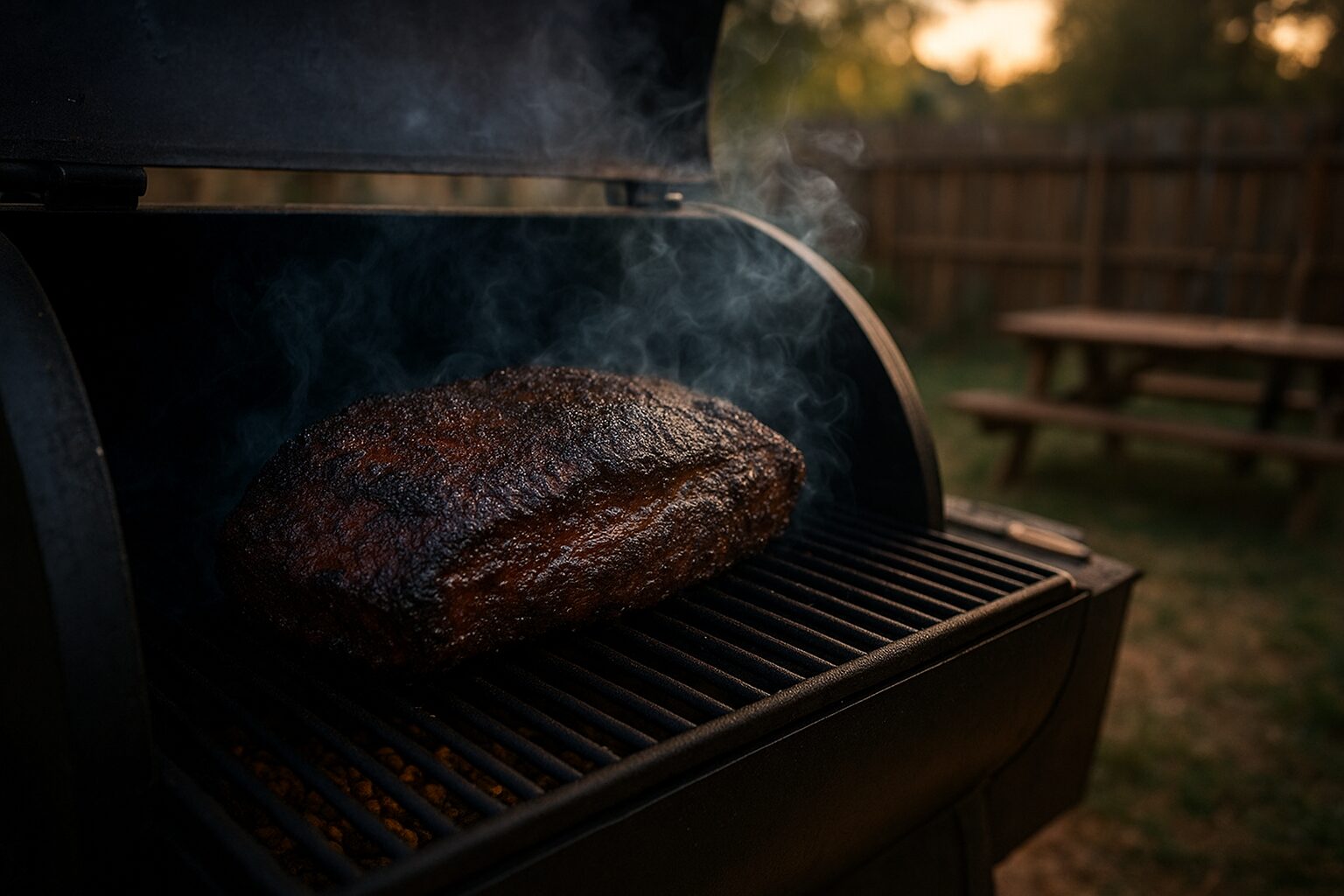
I’ll never forget the Saturday I fired up my pellet grill for a 10-pound brisket. Everything was ready meat trimmed, rub on, water pan filled, beer cracked.
The first few hours smelled like victory: that rich, bold smoke rolling through the neighborhood, the kind that turns heads.
But as the day went on, something faded. The bark looked great. The temperature climbed. Yet that deep, smoky flavor I was counting on quietly disappeared.
Turns out it wasn’t my imagination it was the smoke curve at work. That invisible arc of flavor starts high when smoke intensity is strong, then drops as the cook progresses and the burn cleans up.
Most backyard pit masters obsess over time and temperature “225 for brisket, 250 for pork shoulder” but few realize how dramatically smoke output changes through the cook.
Once you understand that curve, you can master it and finally get the deep smoke flavor and dark bark that separate good BBQ from great.
What Is the Smoke Curve?
The smoke curve describes how smoke intensity and your meat’s ability to absorb it changes as your grill’s temperature rises over time.
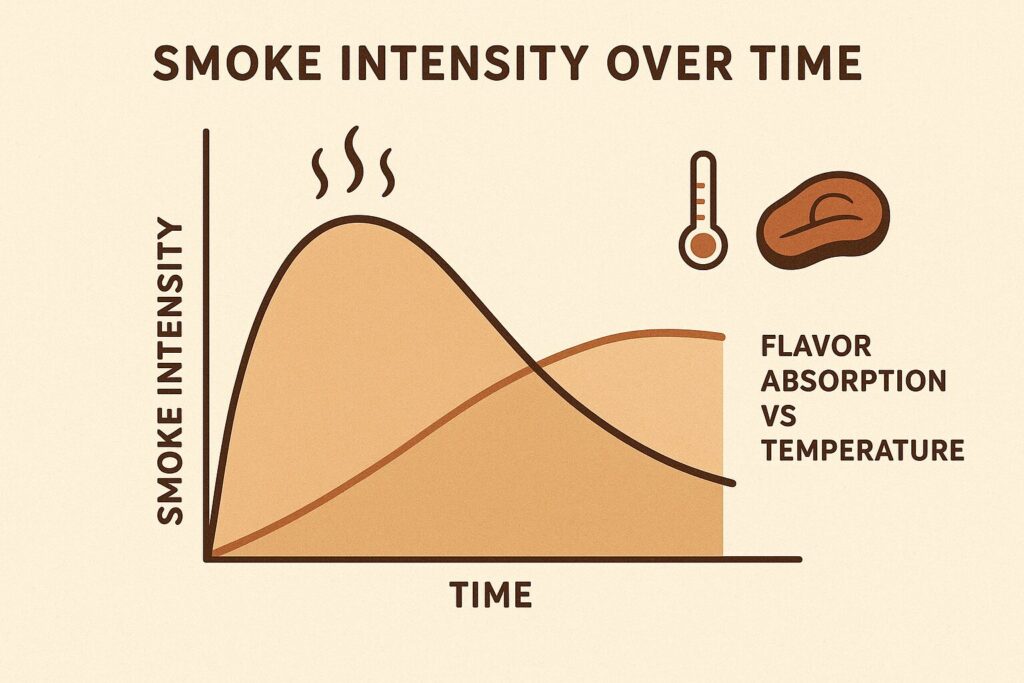
At the start of the cook, your grill runs cooler and pellets smolder. Smoke is dense, aromatic, and flavorful your meat drinks it in.
As the heat builds, combustion becomes cleaner, airflow increases, and that thick smoke turns into a thin, almost invisible haze. The result? Less flavor transfer.
This curve isn’t random its chemistry and airflow in action. Ignore it, and you’ll lose flavor potential. Understand it, and you can time your cook for maximum smoke impact.
How Pellet Grills Generate and Control Smoke
To master the smoke curve, you have to know what’s happening under the hood.
Pellet grills feed pellets from the hopper through an auger into the fire pot, where they ignite. A fan circulates air while a controller adjusts feed rates to hold temperature.
Controller types matter:
- Basic digital controllers pulse the auger on and off. Longer “off” times mean more smolder more smoke flavor.
- PID controllers (common in high-end grills) hold steady temps with short pellet cycles. Cleaner combustion, steadier heat but less smoke.
Many modern grills now include “Smoke” or “Super Smoke” modes. These intentionally drop temperature and stretch out the off-cycles to create that sweet, heavy smoke early in the cook your golden window for building flavor.
As temps climb, combustion becomes more complete, the fire burns cleaner, and smoke intensity drops. That’s the downward slope of your smoke curve your cue to adjust and work smarter.
The Chemistry of Smoke Flavor
Here’s what’s really happening:
When hardwood burns, compounds in lignin, cellulose, and hemicelluloses break down, releasing aromatic molecules like guaiacol and syringol the backbone of that rich BBQ aroma.
At lower temps, smoldering wood releases more of those flavorful compounds. At higher temps, combustion is cleaner, meaning fewer of them survive long enough to reach your meat.
A few quick takeaways:
- Blue smoke = thin, clean, flavorful (that’s the goal).
- White or gray smoke = incomplete combustion, can taste bitter or ashy.
- That pink smoke ring? It’s nitric oxide reacting with myoglobin beautiful, but mostly cosmetic.
Bottom line: the best smoke flavor happens early, during the smoldering stage, not from a thick cloud all day.
Smoke Curves by Meat Type
Every meat rides the smoke curve differently.
Here’s when to emphasize smoke for each cut:
Brisket
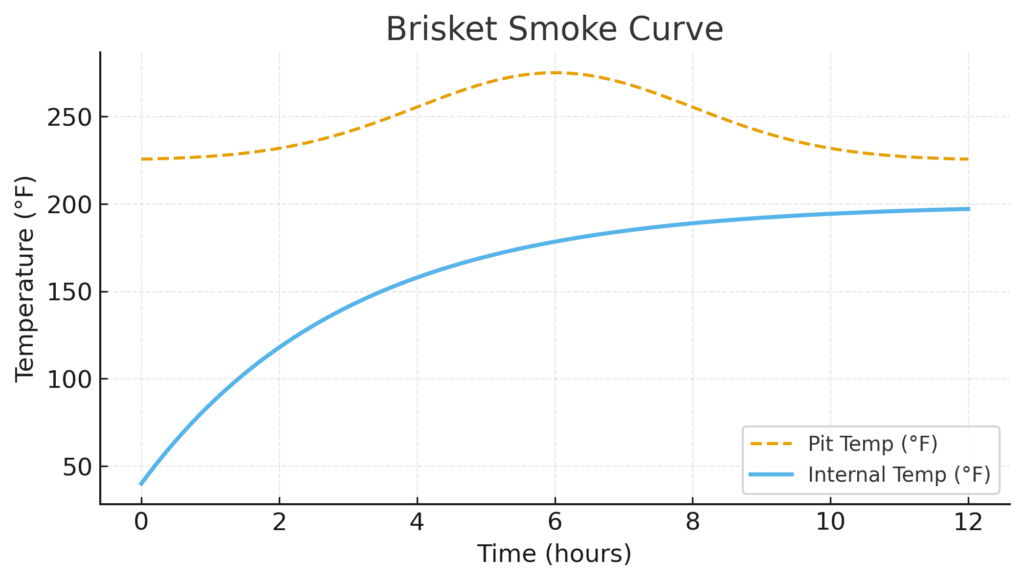
Start at 200–225°F for heavy smoke absorption. Once the bark sets or you hit the stall, raise it to 270–280°F to finish faster and lock in bark.
Pork Shoulder or Ribs
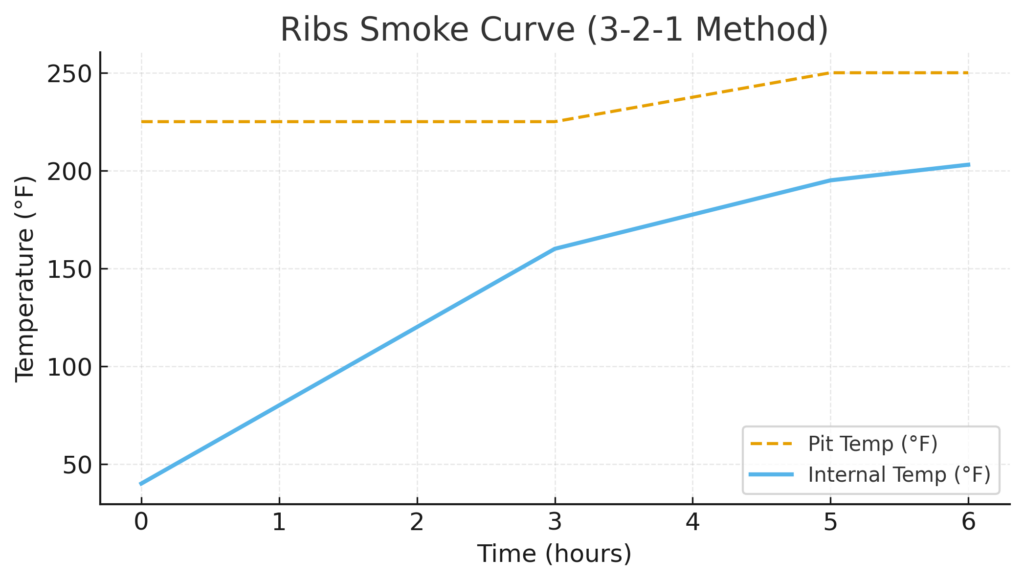
Begin low for rich smoke flavor, then raise to 250–265°F mid-cook to avoid drying out and maintain tenderness.
Chicken
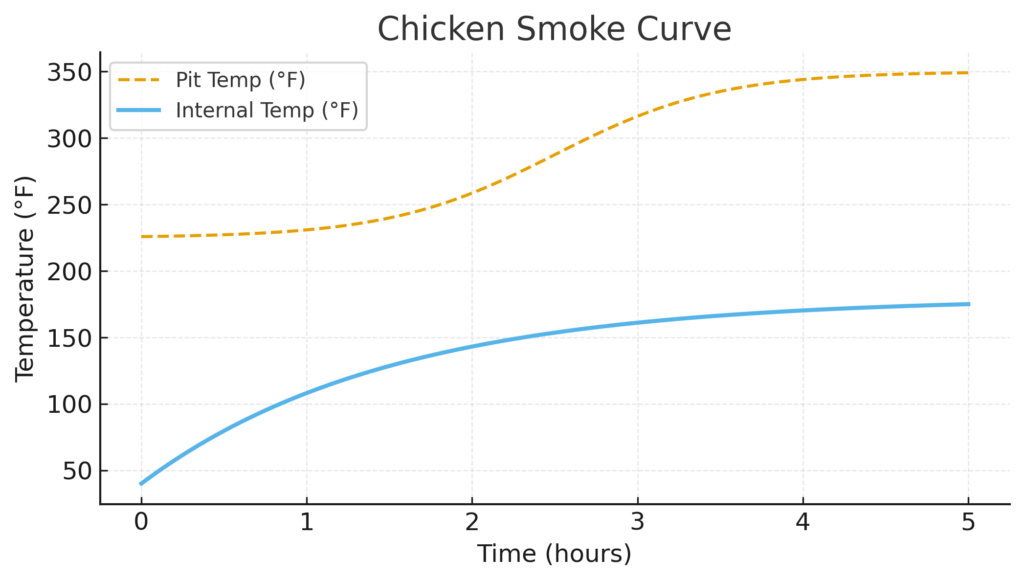
Start higher 250–275°F. Skin crispness beats long exposure to heavy smoke here.
Think of the curve like a wave: heavy smoke early, cleaner burn later. Your job is to catch that early peak and ride it smooth.
Smoke vs. Time: The Law of Diminishing Returns
Here’s the golden rule: most smoke absorption happens in the first 1–3 hours.
After that, the surface of your meat starts to dry out, pores close, and smoke flavor tapers off. Chasing heavy smoke beyond that can leave a bitter, sooty aftertaste.
Instead:
- Run your grill in Smoke mode or around 180–200°F for the first 1–3 hours.
- Then raise it to 225–250°F for steady cooking and bark formation.
- Finish hotter (260–280°F) for brisket or pork shoulder to tighten up the bark.
That’s how you ride the smoke curve with intention deep flavor upfront, clean heat to finish.
How to Manage the Smoke Curve (Step-by-Step)
1. Start Low and Slow
Kick off at 180–200°F or Smoke mode for the first 1–2 hours.
Use 100% hardwood pellets no fillers or oils for richer, more complex smoke flavor.
2. Gradually Ramp Up
After that early phase, bump to 225–250°F.
For brisket, go higher (270–280°F) once you hit the stall to tighten bark and shorten the finish.
3. Pick the Right Pellets
- Oak: great all-around base
- Hickory: bold, perfect for beef
- Apple or Cherry: clean and sweet, ideal for pork and poultry
- Avoid cheap blends that burn too clean and rob you of flavor.
4. Monitor Temperature Accurately
Use dual probes one in the meat, one in the chamber.
Built-in sensors can be off by 20°F or more.
5. Manage Airflow
Keep the lid closed. Every open lid loses heat and disrupts smoke flow.
Clean vents and fire pots regularly to prevent ash buildup and bitter white smoke.
6. Program a Temperature Curve
If your grill allows, plan a staged ramp:
- 180–200°F: first 1–2 hours (maximum smoke)
- 225–250°F: main cook
- 275°F+: finish stage
That’s how you control the smoke curve deliberately, not accidentally.
7. Learn from the Pros
- Aaron Franklin starts brisket around 255°F, and then ramps up near the end.
- Meathead Goldwyn emphasizes airflow and flexibility over rigid temps.
- Traeger, Camp Chef, and Green Mountain all offer Super Smoke modes for early flavor building.
Pro Insights: Smoke Smart, Not Hard
Some pit masters claim pellet grills can’t match the deep smoke of offset smokers and they’re partly right. Pellet grills burn cleaner by design. But that’s not a weakness; it’s a chance to cook with precision.
The goal isn’t more smoke, its better smoke.
Think of smoke like seasonings add it early, in balance, then let heat do the rest.
Over-smoking is like over salting once it’s too much, you can’t take it back.
Mastering the smoke curve means cooking with intention, not guesswork. You’re not just running a temperature you’re orchestrating flavor.
Frequently Asked Questions About the Smoke Curve
1. Why does my pellet grill make less smoke at higher temps?
Because pellets burn cleaner as heat and airflow increase. Below 200°F, they smolder more; above 250°F, they combust efficiently less smoke, steadier heat.
2. Can I boost smoke flavor without overcooking?
Yes front-load your smoke. Keep temps low for the first 1–3 hours, then ramp up. You can also add a smoke tube for extended flavor without affecting cook time.
3. What pellets give the best flavor?
Use 100% hardwood pellets. Oak for balance, hickory for boldness, fruitwoods for sweetness. Avoid cheap blends.
4. Do PID controllers make less smoke?
Usually. They maintain steady temps with fewer “off” cycles, meaning less smoldering. Use “Smoke” or “Super Smoke” modes to boost flavor early.
5. What’s the difference between blue and white smoke?
Blue smoke is clean and flavorful. White or gray means incomplete combustion it can taste bitter. Aim for a thin, steady haze.
6. How long does meat actually absorb smoke?
Mostly in the first few hours. Once bark forms, smoke adds color more than flavor.
7. Can I over-smoke food on a pellet grill?
Absolutely. Even clean-burning grills can produce bitterness if you chase smoke too long. Treat it like seasoning balance is everything.
Conclusion: Taming the Curve for Perfect Smoke Every Time
You can’t coax great flavor from your pellet grill by just setting a temp and walking away.
The smoke curve is the hidden rhythm of every cook heavy smoke early, a graceful decline as the burn cleans up, and a clean finish that seals the deal.
Respect that curve. Start low, let the smolder do its magic, then raise the heat to finish clean.
When you control temperature, airflow, and pellet quality, the results will follow.
Master the curve, and you’re not just cooking you’re building layers of flavor.
Your bark deepens. Your smoke tastes intentional.
And every slice earns a “wow.”
What’s your next cook?
Drop it in the comments let’s see how you’ll put the smoke curve to the test.
If this helped you, share it with your BBQ crew. They’ll thank you when their next brisket actually tastes as good as it looks.